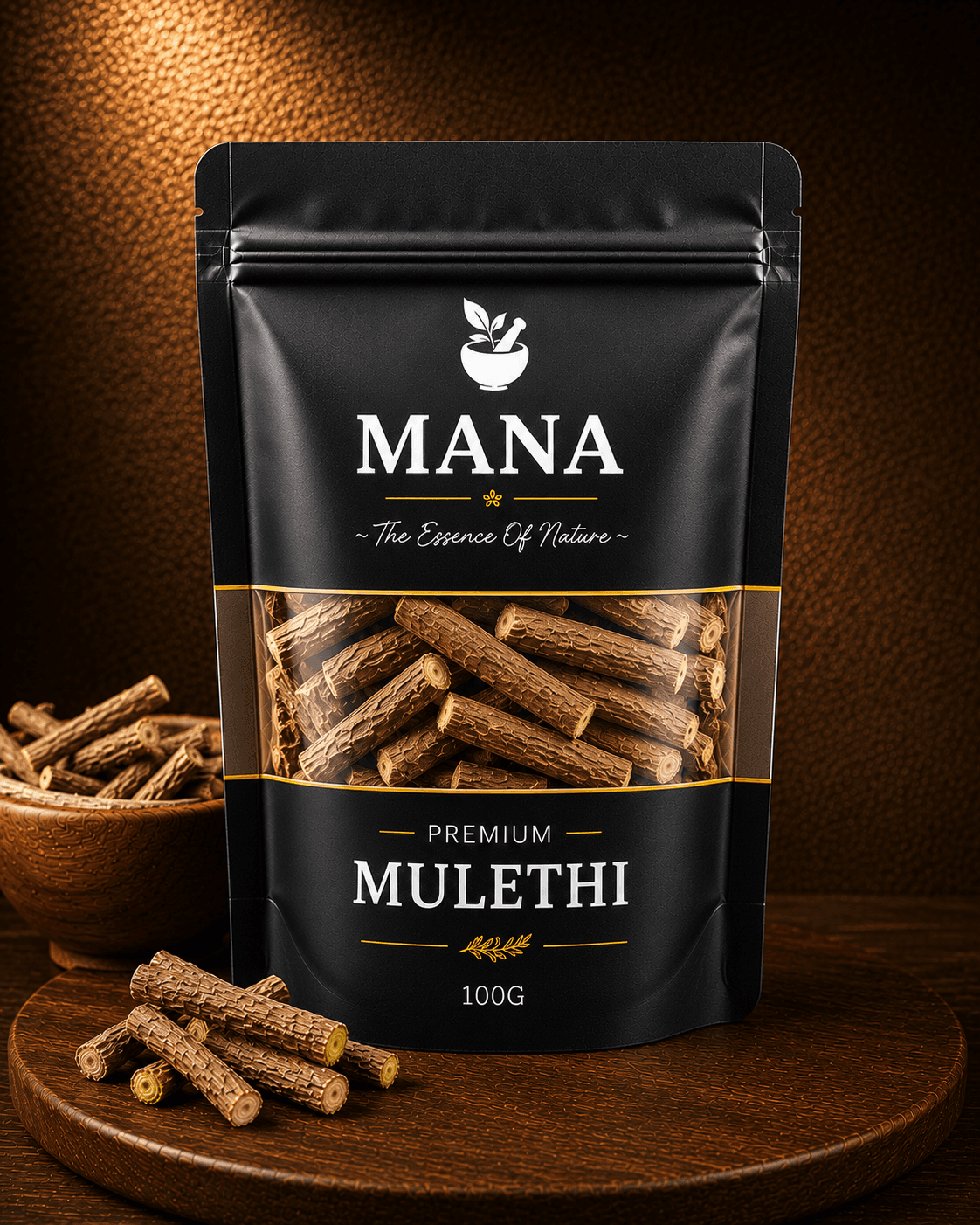
Mulethi
Also known as: मुलेठी · Mulethi Powder · Mulethi Root · Licorice Root · Liquorice · Yashtimadhu · Jethimadh · Mulhatti
Mana Premium Mulethi is a naturally sweet herb traditionally used to support throat comfort and respiratory wellness. Rich in naturally occurring compounds, it is widely used in herbal teas and Ayurvedic formulations. Mulethi is commonly consumed with honey, warm water, or herbal infusions and is often combined with Tulsi and Ginger in traditional wellness preparations. Carefully sourced for purity and freshness.
About Mulethi (मुलेठी)
- Hindi name
- मुलेठी
- Botanical name
- Glycyrrhiza glabra
- Also known as
- Mulethi Powder, Mulethi Root, Licorice Root, Liquorice, Yashtimadhu, Jethimadh, Mulhatti
Mulethi (मुलेठी), also called Licorice root, Yashtimadhu or Jethimadh, is the dried root of Glycyrrhiza glabra. It is naturally sweet — Yashtimadhu means "sweet stick".
Every batch of Mana Mulethi is lab tested and packed fresh to order.
Traditional uses of Mulethi
- Traditionally used for throat comfort and in winter herbal teas and kadha.
- Often combined with Tulsi and ginger in traditional preparations.
How to use Mulethi
- Chew a small piece of the root slowly, or simmer a small amount in water as tea or kadha.
- Powder can be taken with honey or mixed into warm water.
Typical amount: Traditionally a small amount — about ¼–½ teaspoon (1–3 g) a day, for short periods only. Amounts vary by person; check with a qualified Ayurvedic practitioner or doctor for what suits you.
Precautions
- Do not take regularly or for long periods. Large amounts can raise blood pressure and lower potassium.
- Avoid if you have high blood pressure, heart or kidney disease, or low potassium, and during pregnancy.
- Check with your doctor if you take blood-pressure medicine, diuretics, steroids or heart medicine.
Storage
Keep in an airtight container in a cool, dry place.
Quality
Every batch of Mana Mulethi is lab tested before packing, packed fresh to order and FSSAI certified.
Mulethi: frequently asked questions
What is Mulethi called in English?
Licorice (liquorice) root. In Sanskrit it is Yashtimadhu, in Gujarati Jethimadh; its botanical name is Glycyrrhiza glabra.
How is Mulethi used for the throat?
Traditionally a small piece is chewed slowly, or it is simmered into a tea or kadha with Tulsi and ginger.
Can Mulethi be taken every day?
Only in small amounts for short periods. Long-term or large use can raise blood pressure. Ask a doctor if unsure.
Why is Mulethi sweet?
The root naturally contains glycyrrhizin, which is much sweeter than sugar.
This information describes traditional use and is not medical advice. It is not intended to diagnose, treat, cure or prevent any disease. Consult a qualified practitioner before use, especially if you are pregnant, nursing, taking medicine or have a medical condition.