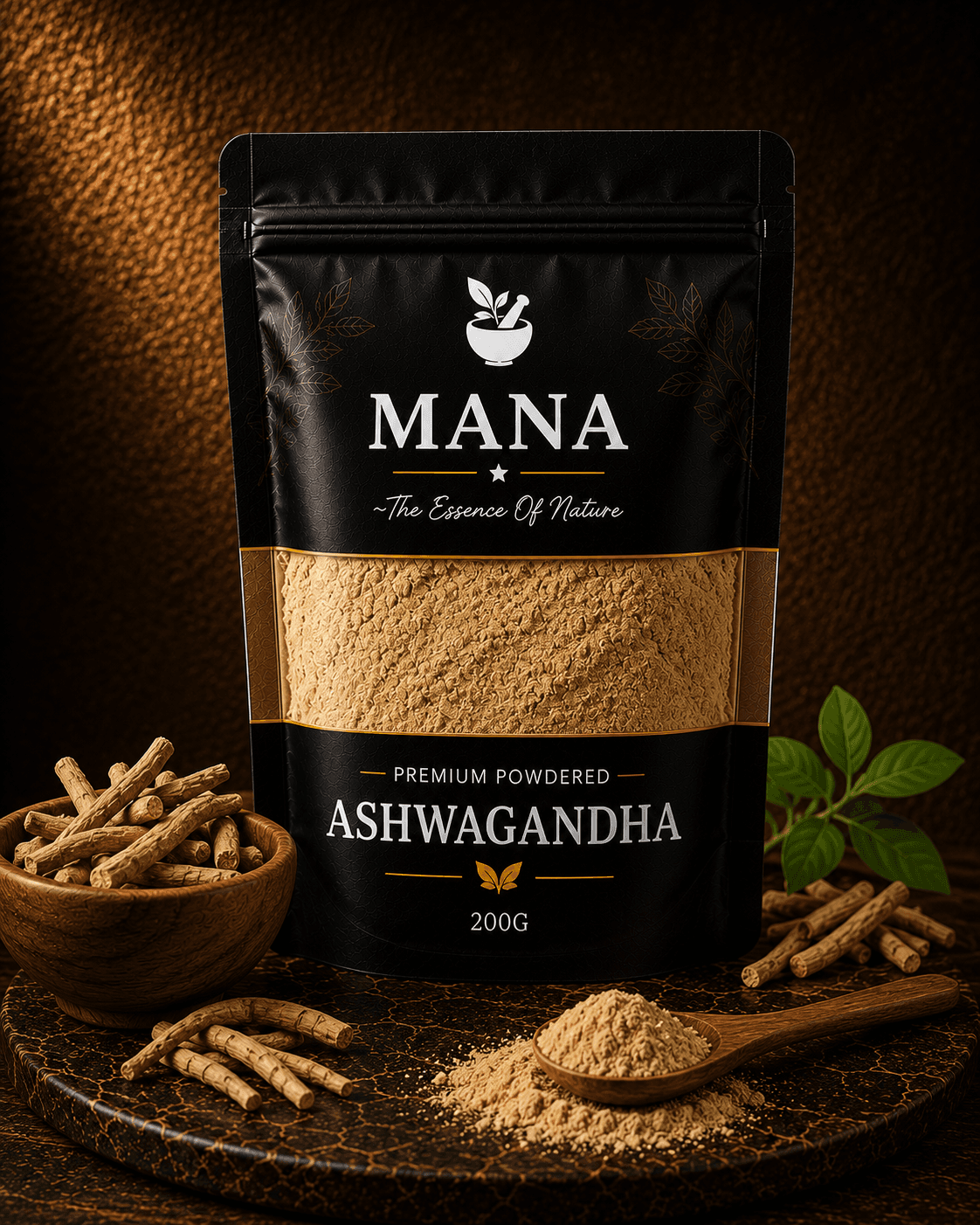
Ashwagandha Powder
Also known as: अश्वगंधा · Asgandh · Ashvagandha · Aswagandha · Winter Cherry · Indian Ginseng · Ashwagandha Churna · Ashwagandha Root Powder
Mana Premium Ashwagandha Powder is one of the most respected herbs in Ayurveda, traditionally known for supporting energy, vitality, and overall wellness. Rich in naturally occurring plant compounds, it is widely used as part of daily wellness routines. Ashwagandha is commonly consumed with warm milk, water, or honey and is often combined with Safed Musli, Shatavari, and Kaunch Beej in traditional Ayurvedic formulations. Carefully sourced and finely processed to deliver premium quality and natural goodness in every serving.
About Ashwagandha Powder (अश्वगंधा)
- Hindi name
- अश्वगंधा
- Botanical name
- Withania somnifera
- Also known as
- Asgandh, Ashvagandha, Aswagandha, Winter Cherry, Indian Ginseng, Ashwagandha Churna, Ashwagandha Root Powder
Ashwagandha (अश्वगंधा), also called Asgandh, Winter Cherry or Indian Ginseng, is the dried root of Withania somnifera — one of the best-known herbs in Ayurveda. Its Sanskrit name refers to the root's strong, horse-like smell.
Mana Ashwagandha is sold as a fine root powder (churna) and as whole dried root. Every batch is lab tested and packed fresh to order.
Traditional uses of Ashwagandha
- Classed in Ayurveda as a rasayana — a herb traditionally taken for strength, stamina and general vitality.
- Traditionally taken in the evening with warm milk as part of a calming, restful routine.
- Commonly combined with Shatavari, Safed Musli and Kaunch Beej in traditional preparations.
How to use Ashwagandha Powder
- Stir the powder into a cup of warm milk; add honey or jaggery once the milk has cooled slightly.
- Or mix with warm water, or blend into a smoothie to soften the earthy, slightly bitter taste.
- Whole roots can be simmered in milk or water (as a decoction) and strained.
Typical amount: Traditionally about ½–1 teaspoon (roughly 3–5 g) of powder once or twice a day. Amounts vary by person; check with a qualified Ayurvedic practitioner or doctor for what suits you.
Precautions
- Avoid during pregnancy, and speak to a doctor first if breastfeeding.
- Check with your doctor first if you have a thyroid condition, an autoimmune condition, liver problems, or take sedatives, thyroid, blood-pressure or diabetes medicine.
- Stop use and seek advice if you notice stomach upset or any unusual symptoms.
Storage
Keep in an airtight container in a cool, dry place away from sunlight. Use a dry spoon so the powder does not clump.
Quality
Every batch of Mana Ashwagandha Powder is lab tested before packing, packed fresh to order and FSSAI certified.
Ashwagandha Powder: frequently asked questions
What is Ashwagandha called in Hindi?
In Hindi it is अश्वगंधा (Ashwagandha), often shortened to Asgandh. In English it is sometimes called Winter Cherry or Indian Ginseng; its botanical name is Withania somnifera.
How do I take Ashwagandha powder?
The traditional way is ½–1 teaspoon stirred into warm milk, usually in the evening. It can also be taken with warm water or honey, or added to a smoothie.
Is Ashwagandha powder better than the whole root?
The powder is ready to use. Whole root keeps its aroma longer and is preferred for decoctions; you can grind it as needed. Both are the same plant part.
Who should avoid Ashwagandha?
Pregnant women, and anyone with a thyroid or autoimmune condition, liver problems, or on sedative, thyroid, blood-pressure or diabetes medicine should consult a doctor before using it.
Why does Ashwagandha smell strong?
A strong, earthy smell is natural for the root — it is where the name ("smell of a horse") comes from. It is not a sign of spoilage.
This information describes traditional use and is not medical advice. It is not intended to diagnose, treat, cure or prevent any disease. Consult a qualified practitioner before use, especially if you are pregnant, nursing, taking medicine or have a medical condition.